“I was only saying to old whats’is name the other day – at least I think it was the other day – the old memory isn’t quite what it was – you know, the chap with a wooden leg – nasty accident pig-sticking in Dehra Dun – anyway, where was I? Oh yes thank you, I was saying to this fellow the other day that, when I was in Burma – at least I think it must have been Burma, bloody hot and a lot of temples – I met a chap who was Adjutant of 1st Burma Rifles, can’t remember his name for the life of me – anyway hell of a good chap – killed, poor bugger, on one of Wingate’s expeditions – at least I think it was Wingate, might have been with Slim who was by way of giving the Nips a good hiding until the little sods gave up and the war was ended in 1948 – 45 did you say? – not much good at dates any longer – never was if I’m honest – no need to tell my Memsahib that.”

“Oh I’ve just spotted a couple of chaps who were brigaded with us in Skinner’s something or other – Horse did you say? You’re probably right, I must tell them about that chap – can you remember his name? – yes, Carstairs absolutely right – who lost his leg pig-sticking – at least I think it was pig-sticking – might have been polo.  So if you’ll forgive me, I’ll just go and have a bit of a chin wag with them. Sorry, what did you say your name was? oh yes – funny things memories – let you down every now and again don’t you find?”
Mike Robjohn spotted an article in Country Life about feral goats.  It prompted him to write this letter to the Editor, which was published recently:

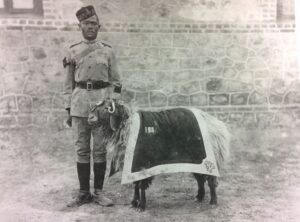
Your short article on feral goats in your October 15th edition brought back the memory of another incident involving a similar problem. In 1971 1st Battalion 2nd Gurkha Rifles went from Singapore to Western Australia for six weeks training, in a range area north of Perth. A request was received from the local government as to whether the battalion could assist with culling a huge number of feral goats which had accumulated on an offshore island which were gradually destroying the wildlife and woodland. Accordingly, a company was dispatched to carry out this mission under the command of an unusual officer nicknamed “The Admiral”. The task was of course gleefully welcomed as goat meat is very much appreciated in a Gurkha cook house!

The job was done but the Admiral saved one animal from the pot, a very pretty small white kid which he managed to bring home from Australia to Singapore courtesy of the Royal Air Force. After three or four months in Singapore, the goat made yet another journey from Singapore to Hong Kong, courtesy of the Royal Fleet Auxiliary. Once established in Hong Kong, the Admiral appointed a goat orderly whose job it was to sit outside of his office on the lawn and manage the animal. But by now the kid was no longer a pretty little thing, it had developed into a rather large, overfed, smelly and brown beast. Much time was spent by unkind members of the battalion carefully watching the goat and its handler and when there was a chance, releasing the beast from its lawn position and then watch it race down to battalion headquarters where it proceeded to devour carefully cultivated flower arrangements and beds. A telephone call was then made to its owner saying that the animal was loose and what it was doing, and then watching the Admiral fly out of his office at high speed followed by the idle orderly to retrieve it.

After several escapes and much floral damage and much amusement, somebody had a word in the ear of the Gurkha Major. Unsurprisingly, it mysteriously disappeared and was never seen again except possibly by those enjoying a special meal in the cook house.


Sirmooris might also be interested to know that there were two other attempts to have a Regimental mascot. In the mid-1930s and again in 1944 the Regiment acquired a ram which was given to the Buglers to look after. Unfortunately neither survived very long, it is thought because of the poor or inappropriate diet their handlers fed them.

In response to an article in the Gurkha Museum newsletter about the experience of Gurkhas in Japanese captivity, Brigadier Bruce Jackman wrote this email to the editor on 1st Novembner 2025:

My uncle (father’s brother), WJ (‘Bill’) Jackman, was the Inspector of Schools in Malaya/Singapore when the Japanese invaded. He was enlisted into a militia that was raised from all men of military service (including planters etc). He was captured at Singapore and spent time in Changi before he was sent to the Burma Death Railway. His eldest daughter (who lives near me in Bristol) has a piece of paper on which her father drew a map of the Death Railway on which he had marked each of the camps along the railway that the POWs had to build to house themselves. Against each camp he had listed the various diseases he suffered in each – malaria, dysentery, yellow fever etc – yet he survived.

He, along with all the other POWs, were transported to Ceylon in 1945 when they were released. There he met my father who had been working in Far East HQ, Delhi, as Head of E Group (Escape Group), whose job it was to locate and infiltrate Japanese POW camps, and try to arrange escapes – so he had been aware of his brother’s plight.

One of the people Pa helped escape from Hong Kong was Dougie Clague, later Sir Douglas Clague, who many of us would have known in Hong Kong in the ‘70s when he was Chairman of Hutchinson’s International and President of the Hong Kong Jockey Club. He escaped from a POW camp in Kowloon through the sewers and got over Lion Rock, which was then the border with China. When I was CO 2/2GR in ’79/80 he and his wife, Lynne, lived in a magnificent house at Beas River, very close to the quarter where I lived.

Additional information:

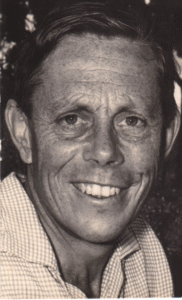
Photo of WJ (‘Bill’) Jackman:

Short biography:

  • Taught at Kuala Kangsar Malay College from Jul 1937. (Kenneth Luke also on staff)
  • Member of (2nd Lt) Federated Malay States Volunteer Force, 1st Perak Batallion, Ser No 5470
  • Married 25 Oct 1940
  • On leave in Kashmir Sep 1941 when war in Far East breaks out
  • CWJ returned to Singapore via Calcutta. Ship (SS Taisang) torpedoed close to Singapore. Spent several hours in water before being rescued.
  • Captured @ fall of Singapore to Japanese 15/2/42. Detained in Changi.
  • 1st official notification of POW Jan 43. First POW postcard from CWJ in Aug 43
  • MRJ stayed with Ray & Joan/Rosemary & Edward Hunt for some months teaching at a school in Darjeeling India but then returned UK end Aug 1942.Tempy work as speech therapist to stroke victims then War Office in Oxford (MI5 decamped to Blenheim Palace. Worked with Marjorie Hutchinson) from Apr 43 to Aug 45
  • Assigned in Nov 42 to No 2 Group in Thailand. Various camps Changkai, Wun Lun, Tarkalin, Wan Po, Takunun up to Kilo 226) until railway completed in Oct 43. Returned to Chungkai in Mar44 and remained until Mar 45 then via Kamburi until Jun 45 when moved to Nakon Nyok (east of Bangkok) until liberation in Aug 45.
  • Released Aug 45
  • Returned UK via India in troopship Empire Pride Oct 45
  • Returned to Malaya in May 46

Click on the following links to download related documents as shown: