Brigade of Gurkhas Nepal Battlefield Tour 10-17 May 2026
‘Purkhako Paurakh’ (पुर्खाको पौरख) – ‘The Bravery of Our Ancestors’
17 members of the Brigade of Gurkhas Nepal (BGN) led by Lieutenant Colonel Rob Browne, Deputy Commander BGN, went on a tour of battlefield sites in Nepal and India from 10-17 May 2026. They visited the Ridge at Delhi where the Sirmoor Battalion, later 2nd King Edward VII’s Own Gurkha Rifles (The Sirmoor Rifles) had fought against mutineers in 1857, and Jaithak and Nalapani, the sites of two key battles in 1814 during the Anglo-Nepal War.
The aim of the tour was to foster the professional development of the Junior NCOs, Senior NCOs and Officers who took part. Captain Karnabahadur Thapa, late 2GR and Director of the Gurkha Memorial Museum in Pokhara, was the historian on the trip. Click here to download the itinerary of the battlefield tour, and here to download the pamphlet giving detailed background to the battles that were studied. The findings and conclusions reached as a result of the tour can be downloaded here, which include some personal reflections by SSgt Mukesh Rai.
Visit to the Ridge at Delhi
The siege of Delhi in 1857 was the key turning point in the Indian rebellion, enabling the British and their supporters to decisively overcome the mutineers. The Sirmoor Battalion of Gurkhas, which later became the 2nd King Edward VII’s Own Gurkha Rifles (The Sirmoor Rifles) played a key part in this action. After an epic march from Dehra Dun they held the vital ground of the ridge at Delhi against 26 major assaults by thousands of mutineers, and several smaller ones, fighting alongside the 60th Rifles, a British Regiment, and the Guides before overcoming the rebels in an attack on Delhi itself on 14th September. They sustained 327 men killed or wounded. The loyalty, bravery and resilience of the Gurkhas greatly enhanced their reputation with the British, establishing a strong comradeship and mutual respect which endures to the present day. To mark their achievement Queen Victoria presented the Regiment with The Queen’s Truncheon, which is still carried on parade today by the Royal Gurkha Rifles.
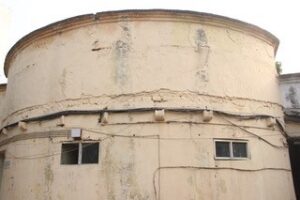
Photographs of Hindoo Rao’s House, the centre of the Sirmoor Battalion’s epic stand and now a hospital:
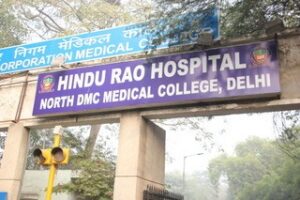
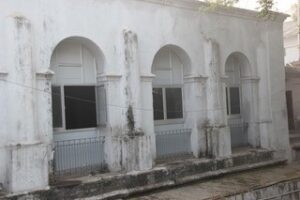
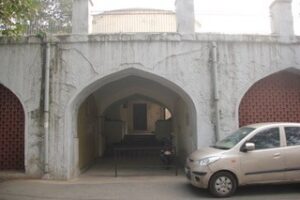
There is a monument on the Delhi Ridge, erected by the British in 1863 to commemorate the British and native soldiers of the Delhi Field Force who died in action, of wounds or of disease in the period 30 May to 20 September 1857. On 15 August 1972, during the 25th anniversary of India’s independence, the Indian Government renamed the site ‘Ajitgarh’, meaning ‘Place of the Unvanquished’. A new plaque was added at the pedestal with inscriptions in Hindi, Urdu, English and Punjabi, stating that the ‘enemies’ listed in the original British inscription were brave Indian freedom fighters and martyrs of the First War of Indian independence.
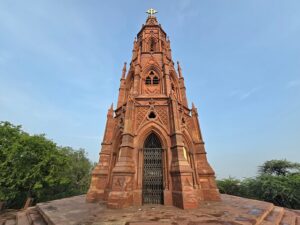
The Delhi Memorial

Captain Karnabahadur Thapa at the Delhi Mutiny Memorial.
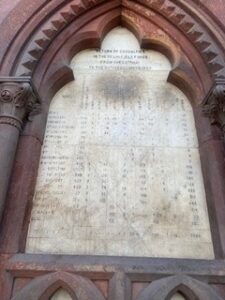
Another view of the Delhi Mutiny Memorial

The Indian Government plaque erected in 1972.
On the Delhi Ridge near the Mutiny Memorial/Ajitgarh is the Delhi-Meerut Ashokan pillar. It has nothing to do with the 1857 Mutiny and dates back to the reign of Emperor Ashoka in the 3rd century BC. The pillar was originally erected around Meerut and was transported to Delhi by Firoz Shah Tughlaq in the 14th century. It was installed at his hunting palace, the Kushak-i-Shikar, near what is now Bara Hindu Rao Hospital. The pillar was broken into five pieces during an explosion in the reign of Farrukhsiyar (1713–1719) and was subsequently reassembled. The surviving pillar is about 10 metres high.
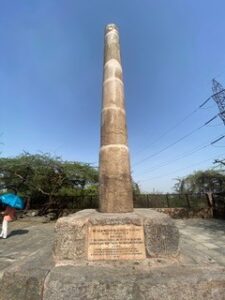
The Delhi-Meerut Ashokan pillar
Visit to Jaithak Fort
The battle of Jaithak took place on 24/25th December 1814. 1738 troops of the East India Company under Major General Martindell besieged about the same number of Nepalese under their commander Ranjor Singh Thapa. Clever Nepalese use of defilade fire and counter-attacks enabled them to drive off the British, who sustained about 300 casualties during the battle and the subsequent retreat. It was not until General Ochterlony took over the following year that the British began to get the upper hand.
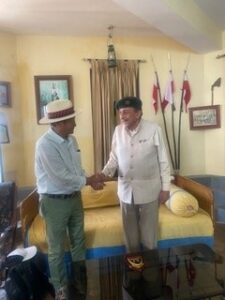
Meeting Raja saheb Kuwar Ajaybahadur Singh, the 10th Maharaja of Aligarh.
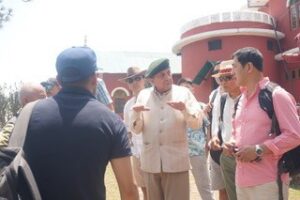
With the Raja saheb on the battlements of Jaithak Fort.
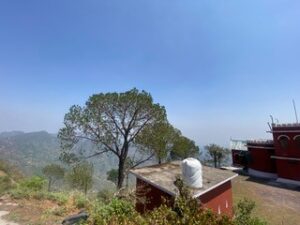
View from the Fort at Jaithak

The Battlefield Tour Group at Jaithak.
Visit to Nalapani
Nalapani was the first battle of the Anglo-Nepalese War of 1814-16 was fought between 31 October and 30 November 1814. British and native Indian troops under Major General Rollo Gillespie besieged Nalapani fort, held by a force of 600 Nepalese, including dependents, under Captain Balbhadra Kunwar. Successive attempts to storm the fort failed and Gillespie was killed in the first British attack. It was not until the British cut off the water supply that the Nepalese were forced to abandon the fort on 30th November, although Balbhadra and his 70 remaining men fought their way out through the encircling British troops.
The fighting around Nalapani, more than any other battle, established the reputation of the Gurkhas as warriors, and won the admiration of the British. Gillespie had been killed and Balbhadra and his men had held off the British and their native Indian soldiers for a month. Even with only 70 remaining survivors after his water source had been cut off, Balbhadra had refused to surrender, and instead had charged out and successfully fought his way through the besieging British troops.
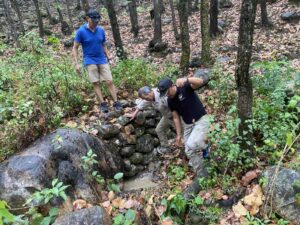
Exploring the battlefield.
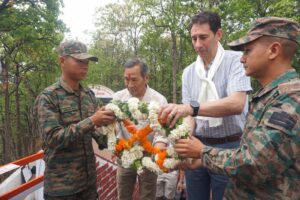
Lieutenant Colonel Rob Browne and Captain Karnabahadur with soldiers of 1st Battalion, 3rd Gorkha Rifles.
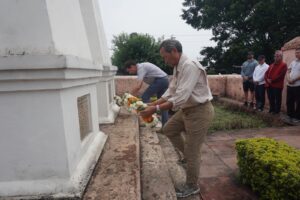
Lieutenant Colonel Rob Browne and Captain Karnabahadur laying wreaths.

The study group at the Khalanga memorial.
Visit to 2GR Pensioners and Widows in Dehra Dun
One 2GR veteran and seven 2GR widows live in Dehra Dun, where they are administered by an Honorary Area Welfare Officer. As part of the BGN Tour programme it was planned to present them all with 200th Anniversary medals, but only three were able to attend:
- Welfare Pensioner 21131543 Rifleman Bhobisor Gurung 1/2GR
- Maya, widow of 21134834 Sergeant Tekbahadur Gurung 2GR
- Putali Dev, widow of 21131515 Rifleman Ishworsing Thapa 2GR
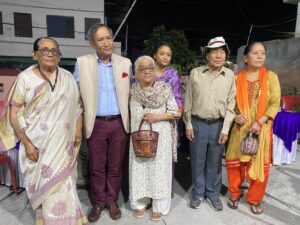
Captain Karnabahadur Thapa flanked by the two widows, with Rifleman Bhobisor and his wife.
Presentation of Commemorative plaque and kukri to Captain Karnabahadur Thapa
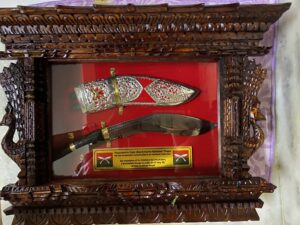
At the end of the trip Captain Karnabahadur Thapa was presented with a kothamuri kukri by Colonel Dan Rex, Commander BGN: